
Chapter 2: Traders’ Coming
Of life in the village, why woodspeople and traders call for a festival, of sorts, and an entirely unexpected gift.

New here?
You might wanna start here instead:
.

.
(Or if you’d rather have an overview first: Table of Contents.)
This here is the fifth part in a series:
Chapter 2: Trader’s Coming, Pt.1
[An unexpected gift]

There was one thing that cut up the eternal sameness of our days though:
Traders’ Coming.
Or, more appropriately, already when the axe people came.
The woods people from the next village over -days away- I mean, those brave souls who had carved out a living from the fringes of the Deep Forest everyone feared. Still adjacent to the road, sure. No one was crazy enough to venture any deeper—no one but the very rare hunter at least, who sometimes ventured inside and might or might not come back after months.
We only had a single one, if the rumors were true.
That we had one at all, I mean. I’d never seen them yet.
Even the woods people had none. Though maybe that was to be expected—they were already deeper in than anyone else, living by the roadside, that dangerous stretch right through the wild country no one willingly set foot in unless you absolutely had to. Unless what you got from doing so was so vastly precious it was worth risking your neck for. Or unless they were very, very stupid.
The axe people were already more courageous than most -and maybe just a little more stupid, as our Elders would whisper behind hands covering their mouths sometimes- for coming here, braving the trip. Lucky for us, though. Everyone knew the road wasn’t safe. Less than a dirt track in places. Yet, they still came.
And a good thing that was, because they were very needed.
None of our fishing people would venture into even the fringes of the woods, further than even the mill and the old herbalist’s hut. They had no place there, no reason to be there. Even when they still needed firewood. They gathered those from the wild tree copses in the surrounding fields, before the Deep Forest ever truly started. The people here were all sensible, not mad. At least that’s what our Elders always said.
People didn’t belong in that forest, and the forest didn’t belong here, and it was all well and good that we kept well away from each other.
.
But they were still all very happy when the woods people came.
Because axe people meant they brought wood, and they also brought the charburner, and we needed them desperately, those rare few who knew how to build those little hills to make coals and could turn the fish into smoked fish much more easily than what our huts were like when the fishers tried to do it themselves, by stoking the hearth and hanging the fish along the ceiling. My parents sometimes did that, and let me tell you, it was absolute misery, choking our lungs out. At least I did. And Da also had that rasp for weeks afterwards. Though they no longer did ever since Feréll came around, because of course it was worse for the little one.
Everything was worse for my little brother, built so frail one might think he’d not been made for living, a half-thing that came out almost an afterbirth, the real child dead. But there was none other than him, and the healer had said there never would be, after that. He was the last. And he was the only one Mamma accepted as real, so… in her mind, he was her only child. I didn’t count.
I never did. Not for her, anyway. He got the songs and the cuddles, the warm blankets and the worry, and I got the nets and the coughing. If you listened to Mum, that was all fair and well, because being what I was, I should be grateful getting even that much. After all she fed me, gave me a roof above my head, a place even to sleep in, and something to do for learning a trade that might keep me later when I was grown. And that was already more than could be asked of her, because I was not hers. Only he was.
.
Traders’ coming and those days when the axe people and the charburner were here were some of the few times when that didn’t matter a lick.
’Cause that was when our Elders were too occupied to mind any of us children much. Freedom at last! Freedom, and fun, too. Because if the Elders got it, why not we?
When the axe people came, they didn’t just come to exchange wood against varying amounts of fish, depending on how good each side could haggle, and against the charburners, too, of course, who wanted their cut as well—of either—for what they offered. And they always took more than the woods people; even I knew that and learned it early. Because they guarded their secrets well, and Da grumbled a lot about how much they demanded ever since we were more dependent on them than others; because the hearth in our hut would no longer serve even sometimes now, what with Feréll, so contrary to others, we were now entirely dependent on them. He never pointed to Feréll as the cause, though. None of them did. Funny, that. They were always quick to point out when something was my mistake.
But even Da forgot about the grumbling in the evenings and around the games the axe people brought with them when they brought in the wood; days before the charburners ever came, because of course the wood had to be already there for them to set to work right away, soon as a trade had been agreed on. They never had much time to waste, the charburners, or so it seemed. The axe people, however, they were much more generous with their time. More joyous, too. Guess they were happy to be out of the dangerous woods for a while, for as long as they could get away with sticking around near our lake, hacking away at the Deep Forest’s fringes, driving it back so it never grew into the fields around, keeping us safe—and getting us all that wood in the first place.
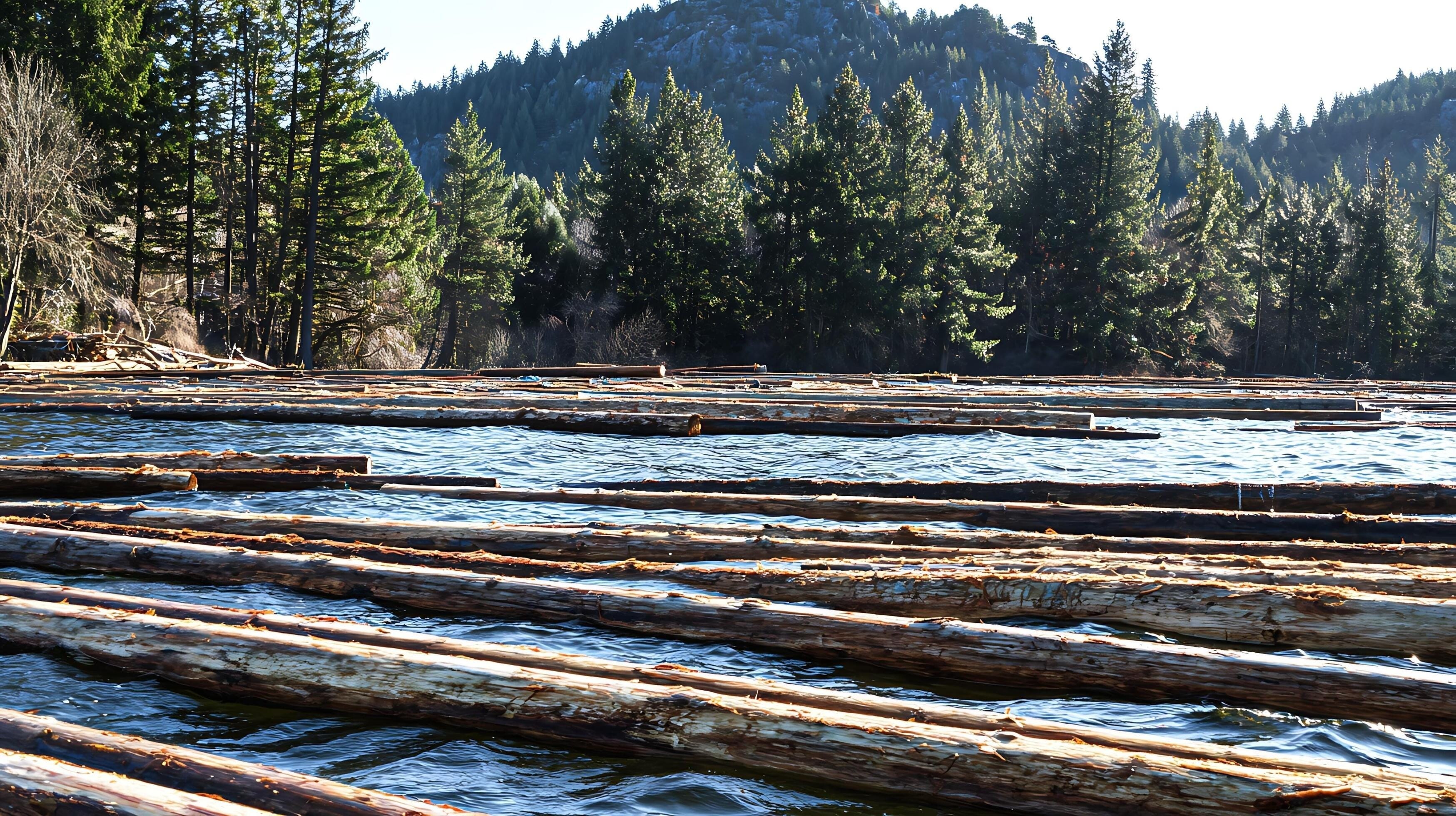
They used the same river the mill ran on, for that purpose. Of bringing the trunks here, I mean, wholesale, sometimes with the crowns still attached, long as the wood wasn’t big enough to clog up the river. Those parts which did they had to cut away and send on by their own. But it all went in the river.

The miller’s reservoir and levees doubled as the catcher then.
I’d wondered a lot how the hell he knew when the axe people would come. It was part of why there were rumors he was a hex of some kind in the first place, ones he never managed to quell, even back then. The axe people never sent anyone ahead, you know. They just started packing the wood into the river, sending it along, when they had enough. Maybe we should’ve rather suspected the axe people of being hexes. How did they know when the miller would close his levees?
And yet our suspicions fell only ever on the miller.
He didn’t seem like someone who would bend his neck to anyone, back then, you see. And it very much seemed like magic from the fairytales and horror stories that we’d exchange—or that our village bard would occasionally tell, if we got lucky enough—how the miller always knew when the woodcutters came and closed his flood gates in time so the trunks wouldn’t leave his basin.
He opened and closed them every few days, anyway, true—but how was it that those two things went together so neatly? It wasn’t like he seemed to have a fixed schedule for it. At least, we never succeeded in working one out.
It had to be magic.
No matter that all the Olders, and Elders too, insisted magic wasn’t real and we were full of shit.
.
We tried hard, I’ll have you know.
Liked to play with the spring flood that the miller caused in the lower river when opening the flood gates for a rush to get the mill going , you see. A whole lot, too. While dipping so much as a toe into that basin was a test of courage, playing in the lower river was something we weren’t afraid of. Far enough from the miller no one would complain. Far enough to be safe that he wouldn’t catch us, too. It was not like he owned the whole river. The lower part belonged to the village.
But the flood reached it just the same when he started it, of course—perfect time to get ourselves drenched, have it crashing and rushing over us if only we noticed. Sometimes we’d get in ahead, in hopes of it coming, speculative-like. Sometimes we’d get lucky. Sometimes not. But we never just sat in there waiting for hours, anyway.
The river was a good place for play, even if our biggest water parties–and battles–all happened down in the lake, of course. The river was for jumping across and racing around, and to see who would go down with a splash—sometimes pushed by another, most always ending in the whole crowd of us drenched and wet to the bones from jumping around and swimming and dunking each other in the water.
Even if the dunking didn’t work quite as well as in the lake when we got older—when we were this young? We were small enough yet; the river was still very much more than deep enough to dunk a child. It petered out a bit, down the hill, growing wider and more shallow than above, where the miller’s big wheel was churning the water up—when it was running, that is, obviously—but it never got so shallow you couldn’t dunk a youngling who barely went up to an Older’s knee yet.
That’s what we called the ones who weren’t yet of age to be called an Elder, in case you were wondering, but not quite younglings and not even youngsters anymore either. It’s a real word.
Youngsters? Young adults, or teenagers, you would probably say. The ones between younglings like us and Olders. And we were all such younglings back then.
Anyway.
On top of that, even when there wasn’t a flood, there was still enough current in the river of its own that we could set up whole regattas of little self-made boats, scraped together from sticks and leaves and whatever else we could find. Sometimes we even had cloth scraps for sails, when one of us got especially lucky, but that was rare.
.
We stole quite a few feathers from the hens and geese down in the inn’s yard, however.
Not the live ones, no—what’re you thinking? No, no, the ones they’d dropped on the ground and in the stalls quite naturally. We’d learned rather soon not to bother the birds themselves—at least until we got old enough the birds were more bothered by us than we by them, that is. If you bother hens, they’re bound to peck your hands—and feet, too—you know?
And the geese? Oh, don’t get me started on those honking terrors.
Even as a whole group, we’d had trouble enough getting that one goose off Anur and hiding him away that one day he’d tried to grab one of its tail feathers, more so without getting bitten ourselves. And he was basically family to them, since his family owned them. Didn’t seem to bother the goose much. Had no trouble at all trying to bite his fingers off for trying, did she.
Yes dears, geese don’t just peck—they’re gonna bite you good right away, and hard enough you’ll think they mean to eat your fingers whole, bloody meat-hungry beasts. Don’t get near geese, would be my advice.
No better alarm system in the world than a mean pack of geese. Better than any dog that might be bribed into silence and even wagging its tails by a good piece of meat or other things it likes, going as far as welcoming you, if you make it a regular thing. But geese? Much better to play in the river.
There was enough to do there, more than just pretending to angle for fish—or actually doing it, since it held some small fish, too, even if the bigger carps didn’t go up that way—or wait for the flood days. It was a good place to be. There was a copse nearby, too, that we sometimes used for climbing. Tried to jump into the river from the branches hanging down closest to it, too. Got wiser when we got older and added a swing.
That made it much easier to actually succeed in that than come home with bruises as was more often the case when we were this young. Oh, we sometimes made it into the river—but it was more by rolling down the bankside we’d hit, to much laughter. Ours, too, if we’d got lucky and landed on the bigger clusters of hill grass that had big clumps of soft moss inside and went higher than our heads, cushioning some of the fall. A bit less when you hit a hidden rock pebble and worse if you almost made it and hit the reeds instead. The reeds could be bad. Like, really bad.
Could slice your skin open without problem if you hit it wrong. That one day Ferrick hit it real bad, we had to take him to the Elders to deal with the cuts. No one was laughing that day. I think Anur’s mum even brought him to Dankrun in the end?
.
Our village healer, living in a hut nearer by the woods, outside the village. Spooky, that one. None of us ever went there, not this young.
I seem to have a vague recollection of that; though mostly of waiting in the inn, all hushed-wise until we’d waited so long one of the others suggested raiding the larder and we almost forgot about Ferrick. Almost.
He came back looking like half a mummy—not that I knew what that was, back then—stinking of a bitter herbal salve and something much, much worse in there, but laughing and triumphant again already, making jokes about it. Though I noticed he very much avoided anything that could get him into the reeds again, from then on.
Oh, he still jumped with us, make no mistake. But he chose different branches and was always a little light around the nose when we did, if you looked closely, even if he didn’t act like it. And sometimes, when he thought no one was looking, he had that look on his face. Hesitated a moment too long—until Anur would say something and he’d invariably rib back with something worse, all bluster again, and jump anyway. Thankfully, no one else got cut up as bad by the reeds as all that anymore.
It couldn’t hold us away from playing there, either. The place was just too enticing and full of things to explore and use for play, from small animals to try to catch and run after to the waterplays possible there.
So on the days when the flood came, we’d wait for it downstream, all standing with our backs turned, sneaking glances over our shoulders despite the game’s rules we’d made up, jostling and elbowing each other about it, all part of the fun, until we heard the roar and firmed down to let it crash over our heads, see who remained standing.
Other days, we’d bet on which ones of our self-made boats could withstand the test or drowned, putting the extra set we’d made in advance—stashed in a likely place for when the flood happened—in our places. Sometimes with a lot of jostling and sabotage, and cries going up, too. Floods were always a little chaos, but a whole big lot of fun, too. Sometimes we even made boats in a hurry, a different kind of competition: See who would finish one before the flood came, to let it race. If we caught the flood happening early enough, that is. More often, though, we simply raced premade boats, betting on whose would last the longest or go down first.
Jannai once made one with actual nails she’d pilfered from her father’s smithy, if you’ll believe it—I’ll never forget the day; I laughed so hard.
Of course it drowned right away, much to Ferrick’s jeering. It was the one day I didn’t unite with Jannai against the boys—Anur always joined Ferrick when someone else was attacking him, verbally or otherwise; no matter that they always riled each other, if you left them unattended—something I couldn’t even see as betrayal of our kinship, since it was just impossible to not see her idea of putting something as heavy as iron on water and expecting it not to sink as a little stupid and rather worthy, if not of ridicule, then at least of a little laugh. I just couldn’t help myself. I yapped along with the others when I couldn’t dissuade her from using that one for the incoming race. I had tried to dissuade her. So, I’d done my part. The rest she’d brought down on herself.
.
But I can see now how it was a rather non-sensible thought to think the miller would’ve left the levee open to get his mill smashed by incoming trunks just to get in the axe people’s faces. It would’ve been much like Jannai and her nails, right? Wouldn’t have hurt them much, now, would it? But him? Very.
Unless he could somehow make them pay for repairs and maybe emotional damages on top. He just seemed a likely enough sort to succeed in even something like that. Logically, though, there must’ve been some kind of agreement about it—or he’d surely have brought it up with our village head and made an official complaint of it, turning it into a whole quarrel; maybe one of those that might spark a family feud even.
I guess, the miller knew some roundabout time—the axe people did always come during the same seasons, come to think of it, if most certainly not always the same day; neither our calendar nor seasons were even predictable enough that way—and had one of his sons watching for the happening, like we had Tay or Anur, and sometimes Ferrick, watching for the miller opening his levees.
Come to think of it, the miller probably sent Runa—his daughter—to watch for the wood coming in on those days; since the sons were needed in the mill itself, lugging around the heavy sacks and whatnot. I didn’t know all too much about how a mill works, but I knew that much: It was heavy work. And the miller had a cane, so it goes to reason he let most of the work be done by his sons ever since they were grown enough. Just like Mamma used me, and how everyone else gave tasks to their kids, too. He was also one of those people who always went wherever they did with that slowness that speaks of gravity instead of just girth, though he had some of that. It was hard to imagine him lumbering around in the mill, carrying sacks.
Anyway. However he did it, he obviously always knew when the axe people would come before the wood crashed through the open gates and into the mill those big fat trunks could’ve easily clogged up. Or simply the sheer amount of the wood, even had they just sent the cut-off branches ahead at first.
Which they didn’t. They just jugged anything of worth into the river all ajumble. Or at least I couldn’t see any order to it. The wood seemed to come along however the river wanted, in heaps and clumps, until it clogged up the miller’s whole basin the woods people would then take it from when they finally came down to the village. When the wood dammed up so much it started accumulating up the way the river came from.
.
The miller’s basin, of course, was up on the hill, or I guess the pressure could’ve gotten too much, shredding the levee by pushing the wood against it or something. So the axe people still had to bring the wood down the hill into our village.
They had a very neat trick for that: They didn’t just take the wood out of the basin and carried it the last part. Although… I think they did with the more stubborn branches that got packed up into packages to carry after all. They mostly weren’t so lazy that the charburners set up shop on the hill, and the fishers would’ve had to roll all the barrels of fish up the hillside or carry them there in packs. They were kind enough to always bring it down. And, as I said, the charburners often trailed after them, unless they wanted to spend days waiting by coming directly with them.
The more timid ones did. Guess they didn’t wanna brave the Forest alone, even on the road. I didn’t see too much of the charburners, truth the be told; was too young back then. And didn’t see ‘em much later either, for different reasons, but we’ll get to that.
Stick with me for a bit, eh?
As I was saying, the axe people had a very nice method to bring the trunks down to us: They made games of it. Races. Rolling the trunks down the hill. Using them like sleds. Pushing them over and even tossing them.
Yes, you heard me right. The woods people were all strong, no matter their sex or gender. They tossed whole trunks. Measured how far each toss was before it slid down the hill on its own. The ones who tossed the farthest, rolled down the fastest, could stay on the trunks the longest were the ones who got prizes. Though the prize was most often that the others would buy em rounds and food in the inn.
.
It was a bit like a big festival suddenly erupting, every time.
We could never quite predict when they’d come, unless someone was fetching flour at the mill, of course, or delivering grain—though I think, the fetching and bringing was mostly done by the miller’s sons? Which was part of the whole mystery and the hex rumors—so it always seemed to happen all of a sudden, when the big cheer went up and the first trunks came down the hill with a big boohay—obviously a hill a bit outside the village; where no one had any business standing to be rolled over by a trunk. And then the first people would come running. Both hither and tither—letting the fishers know, too, so they’d row back to take part; unless they’d been especially unlucky and needed to stay out to get as much fish as they still could until the charburners would come along, which sometimes happened, though rarely.
Mostly, the whole village joined in at one point or another.
Even fishers need breaks, you see. And this was as good an excuse as any.
They’d even join the woods people in their races, to the mirth of everyone, though of course they didn’t ever try to toss the trunks. Ferrick’s and Jannai’s fathers were the only ones who ever did, to my knowledge. They were the strongmen of our village, you see, one lugging around big chunks of metal and the other doing woodwork, anyway, so it was kinda expected of him, as a kindred spirit to the woods people, if a different kind. They never managed to toss as far as any of the axe people, though. And for the longest time, their champion was a woman, too!
Had the best technique, the axe people claimed.
It’s what got up high hopes for our Jannai; the smith’s daughter, who’d taken up smithing and now got pressured into tossing stuff by our boys. Ferrick got a big laugh out of how she couldn’t toss nearly as far as the champion did, even with much lighter stuff. But really, what do you expect at the ripe age of five? She wasn’t grown yet.
I gave Ferrick a good boxing in the side for that.
He really deserved a clap on the noggin’, but I didn’t do noggins. I’d already heard some of the Elders say that wasn’t good for your head, and could make you dumb, after all. No one should be dumber than they must; and Ferrick was already acting rather dumb sometimes, in my opinion, so…
He didn’t laugh quite as much anymore when Jannai riled him into competing with her, though. He couldn’t toss half as far as Jannai—okay, maybe half, but definitely not as far as she could; I had to stick with my blood sister on that—so we all got a good laugh out of it, and he went sulking; Anur trailing him for consolation like he always did, soon bringing him back for more games—because of course the two won the racing again, which consoled Ferrick more than anything else could’ve—and watching the adults’ games once we were too spent to have more of our own. That and listening to the songs that would spontaneously break out once they’d had more drink. Sometimes the bard would join in as well, though Uhland seemed to dislike crowds. Strange thing for a bard, if you ask me, but there it was. He just was that way.
Got sensitive ears or something, my Ma would say, with that frown in her tone.
I chose rather not to listen too much when she got that way. Grumbled about dad going to the games, too, she did. I chose not to get involved in that, either. I’d much rather join my friends and have some fun. When Feréll was still very little, that had worked quite well. When Feréll was still very little, that worked quite well. She wouldn’t hand him over, anyway, so she was rather occupied and couldn’t do more than grumble, which was quite fine with me. Especially as long as Ommá could still come along, sitting herself in some quiet corner to ‘watch over the kids’—though that often meant she’d simply take a nap, away from Ma’s incessant complaints.
She’d sometimes buy us sweets or other things, though.
Something she couldn’t have done with Mamma around. Ma would’ve scolded that we couldn’t afford it. Though in reality, I’m rather sure that it was often Tay who ended up taking over the bill in quiet; that is, made his father pay. After all, it had to be good for something that he was the son of the village head, right?
And that one could sure afford a lot. He was a noble, after all. They had one of those fancy stone houses, too. We had only three houses in the village like that, and the only one that was bigger was the inn, and that one only had a stone base, the rest was wood. He also seemed to get some small cut of basically anything, so… It seemed rather fair that Tay made sure the bill for us kids was paid otherwise.
.
Though Ommá did seem to have some secret stock of coins she never told Ma about.
I know because this time, when the traders came after the whole hullabaloo going on before they ever arrived—the fish smoked in advance; for the ones they wouldn’t just take along pickled in the brine they brought with them in large vats and barrels just for that reason, most of their wagons filled with that, and not stuff to actually trade—Ommá gave me one of those big round metal things and told me to get something nice.
Insisted I take it, too, when I looked at it with big eyes, disbelieving what I found so unexpectedly in my hands even as I could feel the metal and the tiny bumps on it, from whatever was on it—some kind of face, some strange things that looked like someone had very badly tried to draw some kind of vines trailing the outer edge.
No one had ever given me a coin before.
.
Most fishers didn’t even have any. They exchanged everything in fish, you see. Though I was much too small to carry one of the big Mist’s Tears, those massive carps from our lake that went for the most. I could’ve taken some of the smaller silver fish, I guess, though I suspect the traders wouldn’t have given me a whole lot for those. They were all here after the ‘Tears of Mist’, as they preferred to call ‘em, rather poetically. Just like we dubbed our fishing grounds Mistlake, not that highborn ‘Lake of Mist’ dung, the Mist-Tears were just the Tears or sometimes even the Misties. I didn’t quite understand how the tears could be so precious you’d risk your life for it, traveling all that way through the Deep Forest, and not just from the last village, but all the way from Mistwall, the big city I’d only ever heard rumors of. Supposedly, it was bigger than ten times our village, stacked one right against the other.
That was as much as I had fingers! Can you imagine?
Well, I had trouble imagining that. Couldn’t quite wrap my mind around it.
I had seen some of the Elders exchange the occasional fish at the inn for coin, though; or the other way around, getting food and drink for coins. Seen some from Anur as well. As the innkeep’s son, he of course knew more about that than any of us—bar Tay, that is; of course, the village head’s son had also held coins in his hands before—since the inn was one of the few places were sometimes exchanges happened against coin, especially when the traders came.
So I knew what coins were. That you could trade them.
Even knew that the dull silvery ones were worth less than even the copper ones and the copper ones were less than the shiny silver ones, but I couldn’t make heads nor tails of how much what I held just now was really worth. I did what I’d seen a trader do once then: Bit down on the shiny thing, experimentally. Not much, just a little. Wondering what that was all about.
.
It was surprisingly… soft. In fact, I was rather worried about it holding a tooth mark now, a very clear, spiky indentation. But Ommá just laughed. Told me that I should get back a handful of coppers, though, unless I were buying whole baskets of sweets to feed all my friends for days.
I gave her an even more puzzled look at that.
If we had that kind of money at home, why was Ma always worried about not making ends meet? Why was my belly sometimes growling because she let me have too little? I had never complained about it, seeing how Ma was always going on about how we needed the fish for trade as much as we could, and I had to be grateful for what I did get. I’d never once told Ommá about the grumbles in my belly. They seemed shameful, after all. Ma’s portions didn’t look all that bigger, and she was bigger than me, and hers didn’t grumble. I wondered now, if I should have. Told Ommá, that is.
“But–“ I started.
She shushed me with a finger on her lips. “No, Lill.”
She always made a play of ‘little’ on my name. I liked that far more than being called by the full name Ma had assigned me. Liliana always held that scolding undertone, you see. “Just don’t show her.”
Then she proceeded to pat my head. “Got more where that came from, you see.”
“But–“ I tried again.
Why was she giving this to me? Why now? Why the hell hadn’t she used it to get a cure for Feréll then? Surely there was one? Surely if we’d paid the healer enough, she wouldn’t have insisted on giving him that badly costly stuff which he had to take too much of, according to Ma? At least Ma was always going on about how Dankrun wouldn’t do enough to actually cure Feréll. How, surely, she was keeping him sick on purpose, so she could get more out of it. So, if she wanted more out of it—we could’ve just given her more, if we had that, right?
But Ommá just shook her head.
“No, Lill. Don’t tell. Don’t show. This is yours. I won’t always be there.”
Was something wrong with it? It did look the wrong color to me… Was Ommá making her own coin somehow? Hoping the traders would accept it anyway? She had that sad look in her eyes that made me shush, though, no matter the questions ghosting around in my head. But she also winked at me, a twinkle in her eyes, trying to cover it with a smile, telling me: “Traders got some really nice things this time, I heard.”
.
I didn’t even ask where the hell she was supposed to have heard that, before they ever got here. This was one of the things Elders said that didn’t mean quite what they said. That were said for other reasons, even though I often couldn’t guess right. This time, though… I thought I knew why. And I could feel it, too. Had felt it for quite some time now. She didn’t have all that long before she needed to leave. I knew that.
It still didn’t sit right that she’d give that to me. But I guess if she had more… she was just making sure I got my cut; would give the rest to Da and Ma, right? Tell ‘em to keep some for Feréll. Maybe use it to finally cure him. I hoped they’d do that. Surely they would? Mamma was going on a lot about Feréll’s sickness. And she loved him dearly. Surely, she would rather have him healthy, so we’d have one more pair of hands than use it for something else? And here I was. Being told to use that for something… that was all frills. Ma could go on about those for hours.
I still hadn’t found out what ‘frills’ actually were. Somehow all the things she deemed bad and stupid or… things that were too costly.
It didn’t feel right.
So, I closed my hand tightly on it, even if I didn’t know what to do with it.
I’d need some kind of bag, that much I knew. Something to hold it in where I couldn’t lose it. I was too good at losing stuff.
.
Me losing some of the shiny, sparkly, glittering, and colored stones I liked to collect was how Jannai had come up with our little tradition: Leaving stuff for others in “secret spots”. The very same one Ferrick and Anur now wrongfully claimed as their own invention. But it was us, me and Jannai, who did it first, just so you know.
Secret spots were… sometimes simply where someone could find them.
They were meant to be found, after all. But Jannai sometimes actually stashed them so well no one would ever find it, even searching for hours. Then again, she also sometimes had hiding places that were no good at all. She seemed to be a person of extremes, that way. I’d spotted the one where she’d made the world’s tiniest stone cairn from three pebbles almost instantly. The feather she’d stuck in there had also been visibly sticking out in parts. Would’ve looked rather sorry after the rain, I’d wager. So now my secret stash under the bed had another addition.
Maybe I should stuff the coin in there.
No one but me and Feréll were still small enough to get under there, anyway. Though sometimes the speed of his growth made me think he’d end up being unable to go there before I ever did.
.
None of which made this any easier. He could still go there. And he was a toddler who wouldn’t be able to tell this from a random stone, either. He could take it somewhere else and lose it in the mud. No, I needed some better place. Some place I would find again, but no one else. Bollocks. Nothing came to mind right now. I needed a bag. Something small, something I could wear around my neck maybe, but sturdy enough to not rip and not get ripped off, no matter what we did in our adventures and plays; not in water, not in the trees, and not by anything that might make Ma find it either.
Was this enough to make Dankrun heal my little brother?
Probably not. It almost made me want to find Ommá’s stash, seeing how she said there was more. But I knew that wouldn’t be right either. Even if Feréll badly needed more health, I couldn’t make Ommá part with something she herself might need.
Ommá badly needed more health, too, you see.
Before I had made up my mind to try and ask her again, she’d gone to sleep, her hand flopping away from my head, and I could hear her snoring. No surprise there, when I looked back up and her mouth was open, her head dropped back to the neighboring hut’s wood where she sat on one of the trunks that were currently everywhere still, people not yet having cut them up or decided what to make of them.
There was no getting anything out of her now.
Bag. Don’t lose it. Don’t fucking lose, it Lill. Don’t lose it. Don’t open that fist for anything until you can stuff it in a good bag with a good thong around your head. Leather.
I’d need leather. Some of the good stuff. The one that always cost too much, even for just the soles of our shoes, not the whole shoe. Never the whole shoe.
I still had the same old pair. It had just gotten widened again and again by Ma’s tireless hands, stitching more cloth to it. The leather hadn’t given yet. Not in five years. That was the kind I’d need.
The rest of this afternoon was agony, with my fist cramped up like that. Even Jannai was starting to give me strange looks by the end of it, especially since I wouldn’t answer any questions about what I was keeping there. Even during the mud flinging, I didn’t open it. Couldn’t. Not even if it meant more of Ferrick’s clods hitting me, and that I could throw back less—and less well, too—than usually. Can’t lose it. Can’t lose it.
***
.
.
You’ve been reading an excerpt of
the Hunter series : Book 1 - Origin
.
Previous chapter - Next chapter
.
Go back to Table of Contents
.
Explore the Sneakpeeks
.
Verstehst du Deutsch?
Psst. Die deutsche Version ist schon weiter als die Übersetzung;
da es sich bei ihr um das Original handelt ;)
Du findest sie hier.